Pluritine Customs
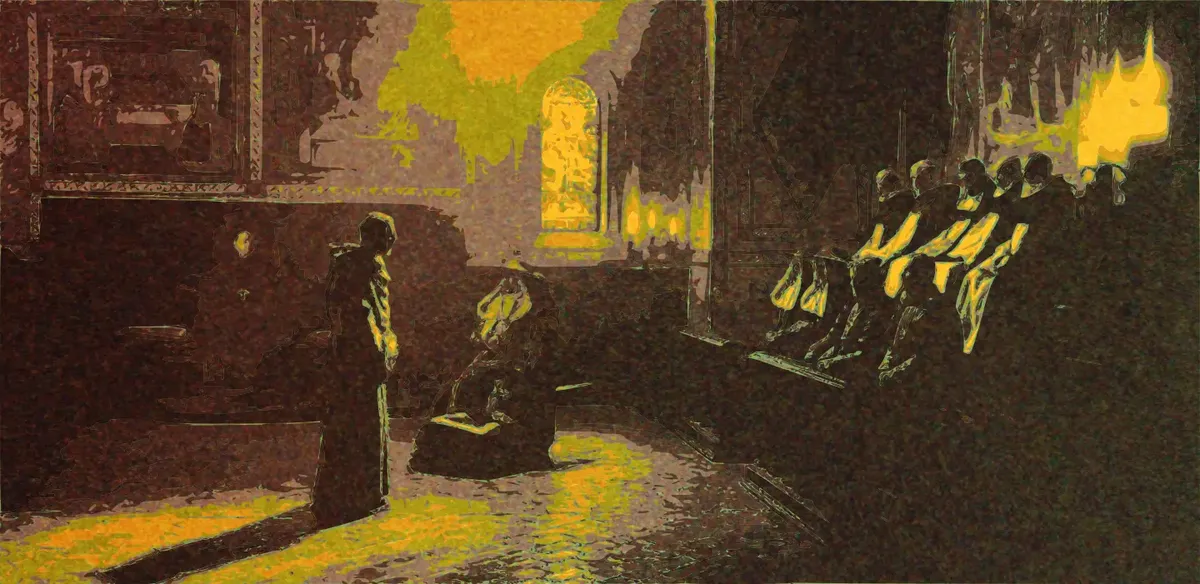
I'm putting money where my mouth is and trying to make the Pluritine faith feel more like a lived religion. Warren's excellent breakdown of medieval law and how to use it for Dolmenwood also got me thinking about historical customs and how to use them in the game. Though, to be fair, I reverse googled quite a few of mine after writing them. Turns out whatever weird shit you come up with, someone in history has probably done something like it.
So here are some customs that faithful folk in Dolmenwood might follow, or at least know about. There's one for each saint who has both a shrine and a spell in the setting, though the connections are often loose. I prefer that to customs neatly mirroring their miracles or patronages. People are just doing shit, not making it a science.
These customs aren't followed everywhere. People may know about them without practising them. They're also just Pluritine customs. Settlements may have their own, along with practices devoted to the old gods, Drune rituals, fairy habits, and so on. If you're inspired, make up some of your own and add them to your game.
Players might find ways to use these customs to their advantage. Referees can use them to inspire random encounters or just have more to draw on when improvising.
The Silent Road1 The dead are prepared at home and carried in silence to their graves. Neighbours leave their work to bear the coffin. The family follows behind.
The Three Refusals2 Before a marriage, the priest asks each betrothed three times whether they consent. Each must answer for themselves. A refusal ends the ceremony. The refuser may take three nights' shelter in the church kitchen or any house with an apron hung over the door. None may take them away against their will.
The Borrowed Hearth3 When a house burns, its inhabitants stay with neighbours until another is raised. Their hosts feed and clothe them without payment. The new hearth is lit with embers from neighbouring homes. The first loaf baked there is divided among those who gave shelter.
The Sickroom Candle4 When someone lies sick or wounded, a candle is set in the window at dusk. Neighbours take turns keeping watch at the bedside until dawn.
The Spare Shroud5 Each household keeps a shroud for the dead without kin. When a body goes unclaimed, the nearest household provides theirs and sews another. Even thieves cut down from the gallows are buried this way.
The Saint's Beast6 Each parish keeps a beast spared from slaughter, a bell about its neck. It wanders where it pleases, fed even by those whose crops it spoils. None may harm it. When it dies, another takes its place.
The Open Well7 By old custom, goatherds may draw water from any well, even those in private yards. No payment is asked. In the High Wold, breggle families often turn them away.
The Sick Tenant8 A tenant laid up by sickness owes no labour to their lord. The missed days are struck from the reckoning.
The Passing Bowl9 When neighbours consider a fine unjust, they pass a bowl from house to house to pay it. No one asks who gave how much.
The Split Tally10 When money or livestock is lent, the debt is recorded in notches on a hazel stick. The stick is split lengthwise, and each party keeps half. When the debt is settled, the halves are fitted together and burned.
The Friar's Return11 Thieves may return stolen goods through a wandering friar. The friar demands penance and keeps their names secret. The owner is expected to make no complaint. Bailiffs sometimes pursue the matter regardless.
The Last Possession12 The dead's finest possession is laid upon the coffin. Kin who wish to keep it must bury something of equal worth in its place.
The Condemned's Bread13 At the burial of someone condemned or accused, their kin lay bread upon the corpse. They pay a coin to whoever eats it. The eater is said to take the dead person's sins.
The Three Swords14 Three crossed swords are painted on the doors of those suspected of sorcery. Neighbours refuse to enter or trade with them until a seeker of St Faxis has come. Washed away, the marks soon return.
The Speaking Mouth15 A grinning stone head juts from the wall of some churches. Those who suspect another of plotting harm leave a written accusation in its mouth. The priest reads them aloud at the next sermon.
The Cursing Stones16 In some churchyards, rounded stones rest in hollows cut into a slab. Those seeking vengeance turn one nine times anticlockwise, naming the offender and calling upon St Abthius to punish the offender. A curse against the innocent is said to fall upon its maker. Some priests bury the stones. Parishioners dig them up.
The Prisoner's Word17 A captive may leave to raise ransom, swearing to pay or return by a set day. Another stands surety, paying if the captive does neither.
The Returned Knife18 Before battle, soldiers exchange knives. The survivors return them. The knives of the dead are carried home to their families.
The Wounded Wage19 A bargeman hurt aboard is lodged ashore with food and a candle at the master's expense. Their full wage is paid when the barge returns. If they die, it goes to their kin.
The Roadside Call20 At dusk, farmers call from their roadside gates to passing travellers. Those who answer are given a place by the hearth until morning.
The Homeward Basket21 Returning travellers leave spare dried provisions in baskets by inn doors throughout the Wood. Those setting out may take what they lack.
The Guest's Watch22 At roadside inns, armed travellers who share the keeper's supper stand watch in turn. The keeper goes first.
The Boast Nail23 Along the pilgrim roads, travellers drive a nail into an inn's doorpost for each deed they swear to do. They may pull it free when they return with proof. Many doorposts are thick with rusted nails.
The Market Arm24 On Frisk, a wooden arm bearing an axe is raised above Prigwort's market. Those who leave their weapons with the Alegard may not be struck until the arm comes down.
The Hanging Shields25 At tourneys, knights hang their shields beside the fighting ground. Anyone may touch a shield and challenge its bearer to wrestle. Those who refuse have their shields turned to the wall.
Elsa's Folly26 At Dreg, a barge is kept for floods. It stands on skids above the Hameth. The old boatmen still pay for its upkeep. The young usually give nothing. No one alive has seen it afloat.
The Way Trees27 Along the old paths near the Woodcutters' Encampment, trees are furnged so their branches point towards the village. Woodcutters leave them standing when they fell the surrounding timber. Some point down paths swallowed by the bog.
The Serpent Door28 Some chapels have a second door concealed in their walls. It opens only from within. A small serpent carved near the floor marks its place.
The Seventeen Names29 In isolated homes, the seventeen archangels are named before opening the door after dark. Children learn the names by heart. Even those calling for help must wait.
The Unmade Men30 At summer's end, farmers strip the straw from their scarecrows and burn it. Reapers refuse to enter fields where one still stands. Some fields are left with only the bare posts.
The Beasts' Rest31 On St Gripe's feast, no beast is worked or slaughtered. Their owners tie flowers about their necks and lead them to a churchyard to be blessed.
The Beasts' Portion32 On St Hamfast's feast, people hang sheaves of grain in trees beside the paths through the Wood. Nuts and fruit are laid at their roots. Nothing is taken back.
The Yew's Cloak33 On St Wort's feast, people hang spare winter cloaks from yew trees. Anyone in need may take one.
The Unlit Night34 On St Eggort's Eve, households extinguish their lamps and candles at dusk. They keep silent until dawn. Chandlers then bring each household a candle lit from the church altar. None are sold that day.
Inspirations
St Signis. Scottish coffin roads.↩
St Cornice. Medieval marriage consent and church sanctuary.↩
St Hollyhock. Basque customs of rebuilding burned homes and sharing embers.↩
St Lillibeth. Neighbours keeping vigil with the sick.↩
St Clewyd. Charitable burial of the unclaimed dead and executed criminals.↩
St Vinicus. St Anthony's pig in La Alberca.↩
St Gretchen. Customary rights to draw water from another's land.↩
St Pastery. Medieval English sick leave for peasants.↩
St Jorrael. Communal collections to help neighbours.↩
St Keye. Medieval split tally sticks.↩
St Horace. Confession, penance, and restitution for theft.↩
St Willofrith. Grave goods and medieval mortuary dues.↩
St Torphia. Sin-eating.↩
St Faxis. Plague crosses marking infected houses.↩
St Whittery. Venice's lions' mouths, letterboxes for accusations.↩
St Abthius. Irish bullaun stones, used in blessings and curses.↩
St Thorm. Medieval parole and surety for captives.↩
St Sedge. Sworn brotherhood-in-arms.↩
St Wick. Articles VI-VII of the medieval Rolls of Oléron.↩
St Primula. Early Irish hospitality customs.↩
St Ponch. Food left for other pilgrims in Camino de Santiago hostels.↩
St Quister. Medieval night-watch duties for travellers and merchants.↩
St Waylaine. Medieval market peace.↩
St Gondyw. Medieval pas d'armes tournaments.↩
St Elsa. Community flood boats kept ready for emergencies.↩
St Foggarty. Comanche marker trees.↩
St Dank. English priest holes.↩
St Benester. Medieval invocations of the seven archangels.↩
St Goodenough. Japanese scarecrow burning after harvest.↩
St Gripe. Basque St Anthony's Day customs.↩
St Wort. Free on a Tree, a winter coat initiative.↩
St Eggort. Orthodox Easter Holy Light tradition.↩